
Preserving the County's Rural Character
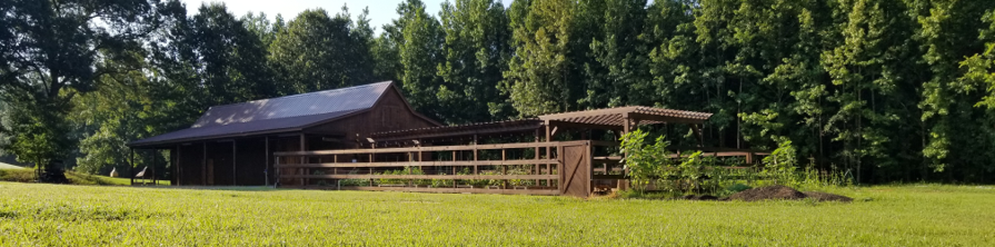
Rural living and farm life are the hallmarks of Fayette County and was a key consideration when Mike and his wife, Denise, moved to the County from another state. They purchased a small farm and are working to produce fruits, vegetables and fresh eggs. Rural living and life on a small farm give Mike a perspective unique to many who enter politics. His desire is to preserve the rural lifestyle and advocate for farmers big and small. Mike will work hard to ensure that Rural Living and Farm Life is preserved for future generations.
Keeping Low Taxes

Managing costs, particularly in retirement, is something which makes Fayette County a very desirable place to live. Mike would like to see business development along the I-40 corridor, which will provide increased tax revenue to help fund growth. Mike, as a taxpayer, wants to be sure taxpayers receive the greatest value for their tax dollars with fiscal responsibility that keeps taxes low.
Effective Growth Management

There is currently an average amount of growth occurring in Fayette County. Ford's Blue Oval will have an impact on growth in the county, but is still under consideration and the project has been delayed until 2029. This may reduce the growth originally anticipated, but there will be notable challenges for Fayette County as Blue Oval comes online. Buc-ee's will be opening at I-40 and Highway 196 in 2027 and the new Pilot will be coming online at I-40 and Highway 222 in that time-frame as well. Buc-ee's and Pilot are more oriented toward transient spending, where drivers on I-40 need to stop for food and gas. It is anticipated that sales tax from these businesses will be substantial, but sales tax is only part of the story. These highly visible businesses will generate ancillary opportunities for other business, such as hotels, restaurants, and retail shopping. To facilitate such businesses there will be need for public works in the county. Water and sewer infrastructure is very costly and finding a balance of services versus cost recovery will be of critical importance for success.
Today's growth is predominantly single family homes and concentrated in incorporated areas to the west and north of the County. Future growth from Blue Oval, Buc-ee's, and Pilot could impact a large portion of north central Fayette County. While there will be a need for public works along the business corridor, not only for businesses, but also single family homes in the same area.
The growth of single family homes will create an increased population, but adding multi-family and low income housing would create significantly greater population density. Mike is concerned that densely populating unincorporated parts of the county would not only threaten the rural lifestyle, but it could drive costs up for county taxpayers. In addition, there are fewer resources, such as public water and sewer, in unincorporated parts of the County and providing such facilities is very expensive and disruptive to rural areas. Consequently, he believes there must be a comprehensive plan established to accommodate such growth that implements policies to carefully manage expansion in unincorporated areas of the County, particularly in District 6. Working together with the Commission, towns and county residents, Mike has done and will continue to do his best to find a balance that preserves rural areas and farm land in District 6, while providing the best County services for all of Fayette County.
Currently, Fayette County does not have a land use policy to complement the growth plan. Land use is a critical issue in Fayette County as there are currently no designated areas for commercial solar facilities, commercial power generation facilities, and other uses such as SMN (Small Modular Nuclear) or land fills. These are key issues where detailed planning is required to pose the least impact on residents in the county.
In addition, there are no public utilities in Fayette County. This is an issue along the I-40 corridor because it will hamper businesses from coming to Fayette County. Modular solutions need to be considered as a means of providing public utilities until more traditional long-term utilities are available. The County may also consider partnering with municipalities which have the capacity to provide utilities as a potential long term solution.
To grow Fayette County's tax base over the next 20 years requires immediate attention. Priority must be given to long term issues such as public utilities and land use. Simply defining a growth plan is far from adequate to address these issue.
Today's growth is predominantly single family homes and concentrated in incorporated areas to the west and north of the County. Future growth from Blue Oval, Buc-ee's, and Pilot could impact a large portion of north central Fayette County. While there will be a need for public works along the business corridor, not only for businesses, but also single family homes in the same area.
The growth of single family homes will create an increased population, but adding multi-family and low income housing would create significantly greater population density. Mike is concerned that densely populating unincorporated parts of the county would not only threaten the rural lifestyle, but it could drive costs up for county taxpayers. In addition, there are fewer resources, such as public water and sewer, in unincorporated parts of the County and providing such facilities is very expensive and disruptive to rural areas. Consequently, he believes there must be a comprehensive plan established to accommodate such growth that implements policies to carefully manage expansion in unincorporated areas of the County, particularly in District 6. Working together with the Commission, towns and county residents, Mike has done and will continue to do his best to find a balance that preserves rural areas and farm land in District 6, while providing the best County services for all of Fayette County.
Currently, Fayette County does not have a land use policy to complement the growth plan. Land use is a critical issue in Fayette County as there are currently no designated areas for commercial solar facilities, commercial power generation facilities, and other uses such as SMN (Small Modular Nuclear) or land fills. These are key issues where detailed planning is required to pose the least impact on residents in the county.
In addition, there are no public utilities in Fayette County. This is an issue along the I-40 corridor because it will hamper businesses from coming to Fayette County. Modular solutions need to be considered as a means of providing public utilities until more traditional long-term utilities are available. The County may also consider partnering with municipalities which have the capacity to provide utilities as a potential long term solution.
To grow Fayette County's tax base over the next 20 years requires immediate attention. Priority must be given to long term issues such as public utilities and land use. Simply defining a growth plan is far from adequate to address these issue.
Supporting First Responders

Fayette County has been growing steadily over the past decade and with that, comes more need for Police, Fire, and EMS services. With Shelby County and Memphis next door, there has been an increase in the need for Law Enforcement in the county. Mike supported raises for deputies to bring their salaries in line with other counties. He also supported the School Resource Officer (SRO) program in Fayette County schools.
Blue Oval, though delayed, will still impact growth in the county. Consequently, Fire and EMS services will require more resources. Mike supported purchasing new ambulances and adding permanent fire fighters to the county fire fighting staff. He also supported the new Baptist Hospital ER enhance response time and turn-around time for EMS services.
Mike also supports the ICE 287(g) Initiative allowing Law Enforcement to cooperate with State and Federal authorities on immigration enforcement.
Blue Oval, though delayed, will still impact growth in the county. Consequently, Fire and EMS services will require more resources. Mike supported purchasing new ambulances and adding permanent fire fighters to the county fire fighting staff. He also supported the new Baptist Hospital ER enhance response time and turn-around time for EMS services.
Mike also supports the ICE 287(g) Initiative allowing Law Enforcement to cooperate with State and Federal authorities on immigration enforcement.
Limiting Commercial Solar

Commercial photovoltaic facilities have become a serious concern for residents of Fayette County. Tennessee state law does expressly allow for solar facilities to be banned, but it does provide for the regulation of these facilities to mitigate the impact on Greenbelt land, as well as surrounding property owners. The concern is over property owner rights. But, Mike believes the real question is, "Which property owner rights?" The owner who leases or sells land to Solar companies is one concern. There is, however, another concern. The installation of photovoltaic facilities has consequences for adjacent property owners:
Currently, the County Commission has implemented a moratorium on solar facility permits through March of 2027. However, this moratorium may be in conflict with state law and could be challenged in court. That being the case, Mike plans to push a solution that will allow the development of zoning regulations and land use strategy. The Last Use Act of 1976 give the commission the ability to decide how much green belt can be used for various commercial purposes, including commercial solar facilities. That being the case, he will ask the commission to set the limit on acreage used by these facilities to the current number of acres in use by commercial solar facilities.
Mike plans to work with the residents of Fayette County and, in particular, the residents of District 6 to build a suitable regulatory environment for commercial solar installations. He also plans to encourage the commission to evaluate the validity of other forms of power generation such as modular nuclear power generation.
- Devaluation of their property due to proximity to a solar installation
- Loss of rural character which is so important to many who relocate to Fayette County
- Rendering valuable farmland useless for cultivation
Currently, the County Commission has implemented a moratorium on solar facility permits through March of 2027. However, this moratorium may be in conflict with state law and could be challenged in court. That being the case, Mike plans to push a solution that will allow the development of zoning regulations and land use strategy. The Last Use Act of 1976 give the commission the ability to decide how much green belt can be used for various commercial purposes, including commercial solar facilities. That being the case, he will ask the commission to set the limit on acreage used by these facilities to the current number of acres in use by commercial solar facilities.
Mike plans to work with the residents of Fayette County and, in particular, the residents of District 6 to build a suitable regulatory environment for commercial solar installations. He also plans to encourage the commission to evaluate the validity of other forms of power generation such as modular nuclear power generation.
Working to Improve Education

Everyone would agree that a good education is a key factor in life success. Mike worked diligently after the 2022 election to find and encourage conservative Republican candidates to run for school board. As a member of the Education Committee, Mike realized there were significant issues regarding school funding. Consequently, he spent many days downloading data from the states financial pages to build a database of spending, and wrote a series of articles title "Comparing School Financial and Academic Performance" which were published in the local paper. This raised public awareness and was an instrumental factor in the 2024 election, where 5 Republicans ran for school board and all 5 won seats giving conservatives a majority on the board. The new board brought in a new Superintendent who is second to none. Education in Fayette County is now on a trajectory that will produce success, but there are still significant challenges. The school system is still under a federal consent order that limits the ability of the new board to make decisions, both financially and educationally, to benefit student education.
Because of the woefully inadequate financial management, which in some cases clearly violated state statutes, as well as the progressive education philosophy of the previous board and school administration, education in Fayette County slipped to the very bottom of the state rankings in Tennessee. This has resulted in a loss of more than a third of the student population since 2013. Since 2013, the school system has lost 937 students. TISA base student funding for 25-26 is $7,295 per student, which amounts to a loss of $6,835,415. To further complicate matters, the board cannot close schools with low student population because of the consent order. Today there is one school with only 150 students, yet the cost of keeping the facility open is more than $2,000,000 per year, and the school cannot be closed without federal judicial intervention.
Mike believes the consent order, in place for 60 years, needs to come to an end. But there are still huge financial challenges for the school system as they work to improve education. While it's not practical for the County to raise taxes enough to meet the shortfalls, there are ways to help without impacting the maintenance of effort dictated by the state. Further, the new board and administration have approached the State DOE for help in dealing with the current shortfalls. Mike has also petitioned state representatives to assist with funding and remediation of the consent order.
There are some interesting facts about poor education. In BegintoRead, research indicates that "2/3 of the students who cannot read proficiently by the end of the 4th grade will end up in jail or on welfare." It isn't practical to enact a large tax hike to fund school system shortfall at this time. However, should education continue to produce inadequate results, increased funding to facilitate law enforcement, judicial proceedings, penal facilities, and social welfare would be required.
The process of moving education forward in Fayette County will be a long and painful process, but Mike is willing to accept the challenge.
Because of the woefully inadequate financial management, which in some cases clearly violated state statutes, as well as the progressive education philosophy of the previous board and school administration, education in Fayette County slipped to the very bottom of the state rankings in Tennessee. This has resulted in a loss of more than a third of the student population since 2013. Since 2013, the school system has lost 937 students. TISA base student funding for 25-26 is $7,295 per student, which amounts to a loss of $6,835,415. To further complicate matters, the board cannot close schools with low student population because of the consent order. Today there is one school with only 150 students, yet the cost of keeping the facility open is more than $2,000,000 per year, and the school cannot be closed without federal judicial intervention.
Mike believes the consent order, in place for 60 years, needs to come to an end. But there are still huge financial challenges for the school system as they work to improve education. While it's not practical for the County to raise taxes enough to meet the shortfalls, there are ways to help without impacting the maintenance of effort dictated by the state. Further, the new board and administration have approached the State DOE for help in dealing with the current shortfalls. Mike has also petitioned state representatives to assist with funding and remediation of the consent order.
There are some interesting facts about poor education. In BegintoRead, research indicates that "2/3 of the students who cannot read proficiently by the end of the 4th grade will end up in jail or on welfare." It isn't practical to enact a large tax hike to fund school system shortfall at this time. However, should education continue to produce inadequate results, increased funding to facilitate law enforcement, judicial proceedings, penal facilities, and social welfare would be required.
The process of moving education forward in Fayette County will be a long and painful process, but Mike is willing to accept the challenge.